How to plan a patio for seating, dining and plants
Plan around the moments you want outside.
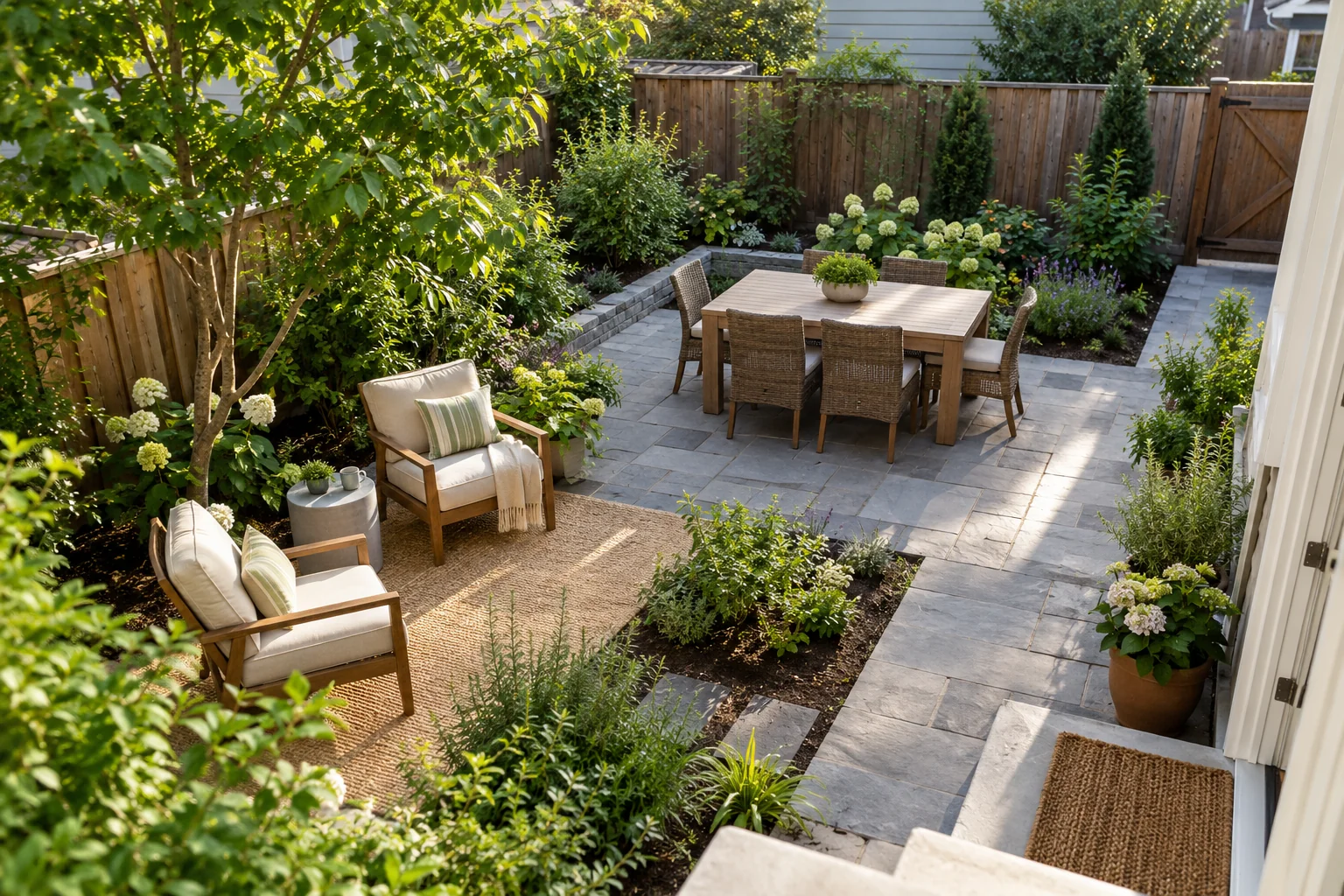
A patio becomes useful when it supports ordinary moments: a morning coffee, dinner with two friends, a place to read while children play. Trying to fit every outdoor activity into one small area often makes all of them less comfortable. Choose a main purpose and let the other activities borrow space when needed. You can test the arrangement with movable chairs before buying a coordinated outdoor furniture set.
Write an ordinary-day brief
Describe how you would use the space on a normal weekday and on a typical weekend. Count the people who are usually there, not the largest gathering you can imagine. Mark the door, route to bins or garden storage, and any existing planting you want to keep accessible. Notice where you naturally stop to sit and where the house provides shelter. Give the primary activity the most convenient location. A beautiful dining table at the far end of an awkward route may get less use than a modest one near the kitchen door.
Use furniture to test the zones
Place existing chairs, boxes, or removable ground markers where proposed furniture would sit. Walk between them carrying a tray, open the door fully, and imagine pulling out each chair. Use a planter or the orientation of seating to suggest a boundary rather than adding a permanent divider immediately. Keep the main route visually obvious so guests do not cut through a seating group. Take photos from inside the house too: a useful patio should look inviting from the room that leads to it, without blocking the view or access you value.
Make the secondary use flexible
If dining is the main purpose, choose occasional seating that can move aside instead of competing for permanent floor area. If reading and conversation matter more, a small movable surface may serve occasional drinks better than a full dining arrangement. Identify where cushions, folding chairs, and table accessories will live when weather changes. Test the layout for several days and keep notes about unused corners. Buy the piece that resolves the most persistent inconvenience first, then reassess; empty space can be useful circulation rather than evidence that the patio is unfinished.
Before you begin
- Choose one primary outdoor activity.
- Mark doors and everyday routes.
- Mock up furniture footprints.
- Walk the layout while carrying a tray.
- Choose storage for movable accessories.
Start with a patio that does one everyday job well. Flexible secondary pieces can expand its uses later, while clear routes and convenient placement make the first stage enjoyable as soon as it is set up.
Plan your project with Remendia