How to organize craft materials and offcuts
Keep useful stock visible without turning every offcut into a permanent resident.
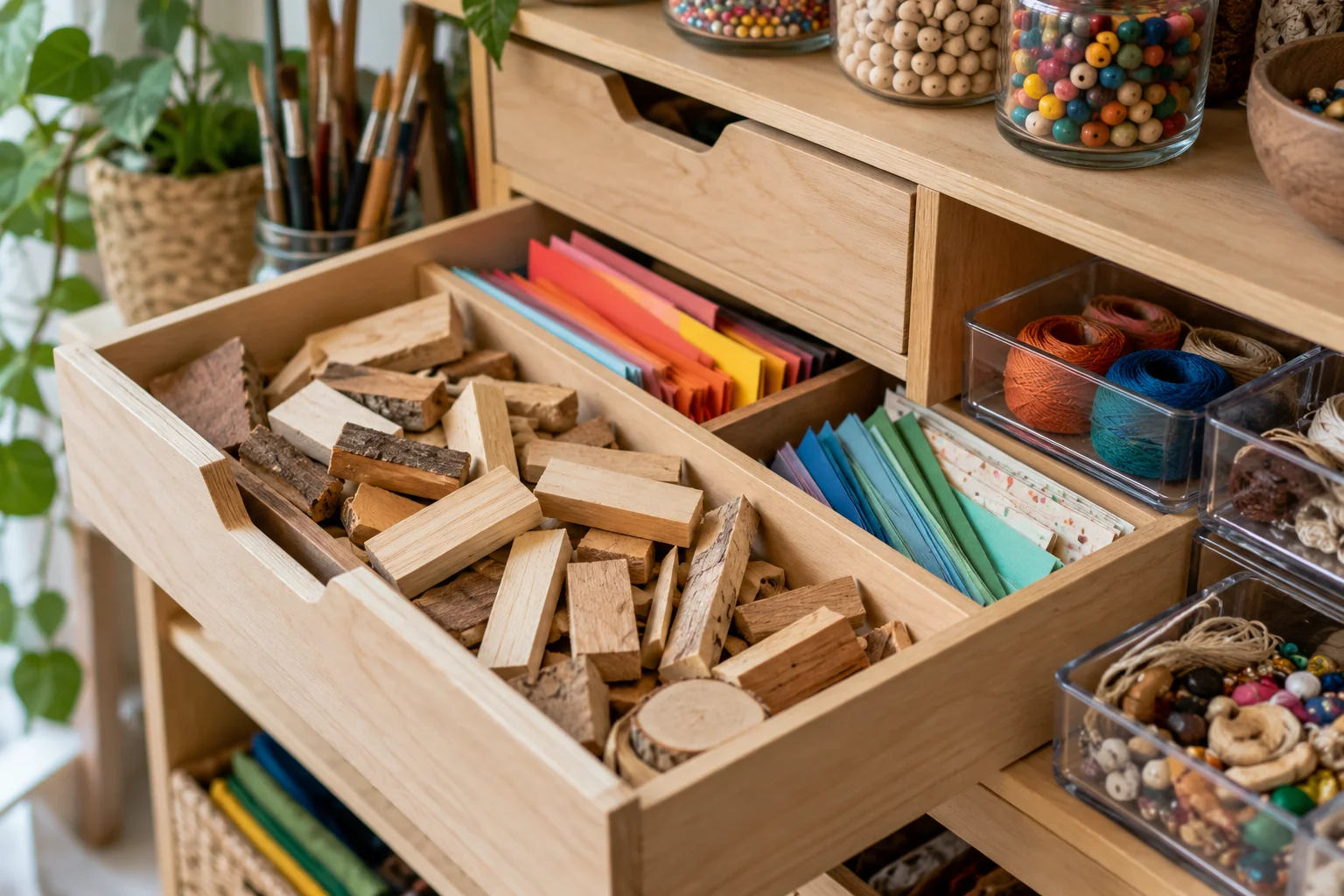
A materials collection should help you make things, not make you feel guilty about what you have not used. Start by separating active-project supplies, general stock, and remnants. Each group needs a different limit and a different way of being found. The aim is not to catalogue every tiny scrap. It is to know what is usable, where it belongs, and when to stop buying duplicates.
Sort by material and useful size
Lay out one category at a time so the room remains usable. Separate damaged or unsuitable material from usable stock, then group the remainder by the way you will select it: dimensions, color, thickness, or another relevant property. Set a realistic minimum useful size for remnants based on projects you actually make. Keep an example of that threshold near the scrap container if it helps decisions. Avoid combining unidentified materials merely because they look similar. Their composition can matter for adhesives, finishing, machine compatibility, and disposal, so retain supplier information where it will be needed.
Protect identification and condition
Keep original product labels and instructions with adhesives, paints, finishes, and other chemical materials. EPA advises retaining hazardous products in their original containers and not transferring them into food containers. Follow each product’s storage conditions and inspect for deterioration rather than assuming everything belongs in a garage. For ordinary dry supplies, select containers that protect against the conditions in your room and make contents easy to recognize. Label unopened reserve stock separately from current supplies. Store larger pieces with appropriate support and follow the storage equipment’s load and anchoring requirements.
Give the collection a boundary
Assign a fixed container or shelf area to each category and review it when that space fills. Put active-project materials in a labeled kit with the next step attached, keeping them distinct from general stock. Maintain a short shopping note listing what is running low and what you already have in excess. Before starting a new project, check the collection first and return unused material promptly afterward. Schedule occasional reviews of abandoned project kits. A useful remnant earns its space by fitting a plausible future task, not simply by being too nice to throw away.
Before you begin
- Separate active kits, stock, and remnants.
- Keep exact material identification.
- Follow product-specific storage conditions.
- Set a physical limit for each category.
- Check stock before buying more.
Material storage works when it shortens the path from an idea to a usable supply. Clear identification, appropriate conditions, and realistic limits will serve you better than an expanding collection of mystery pieces saved for someday.
EPA: household hazardous waste
CPSC: preventing furniture tip-overs
Plan your project with Remendia