How to start a container herb garden
A small container garden with a manageable first season.
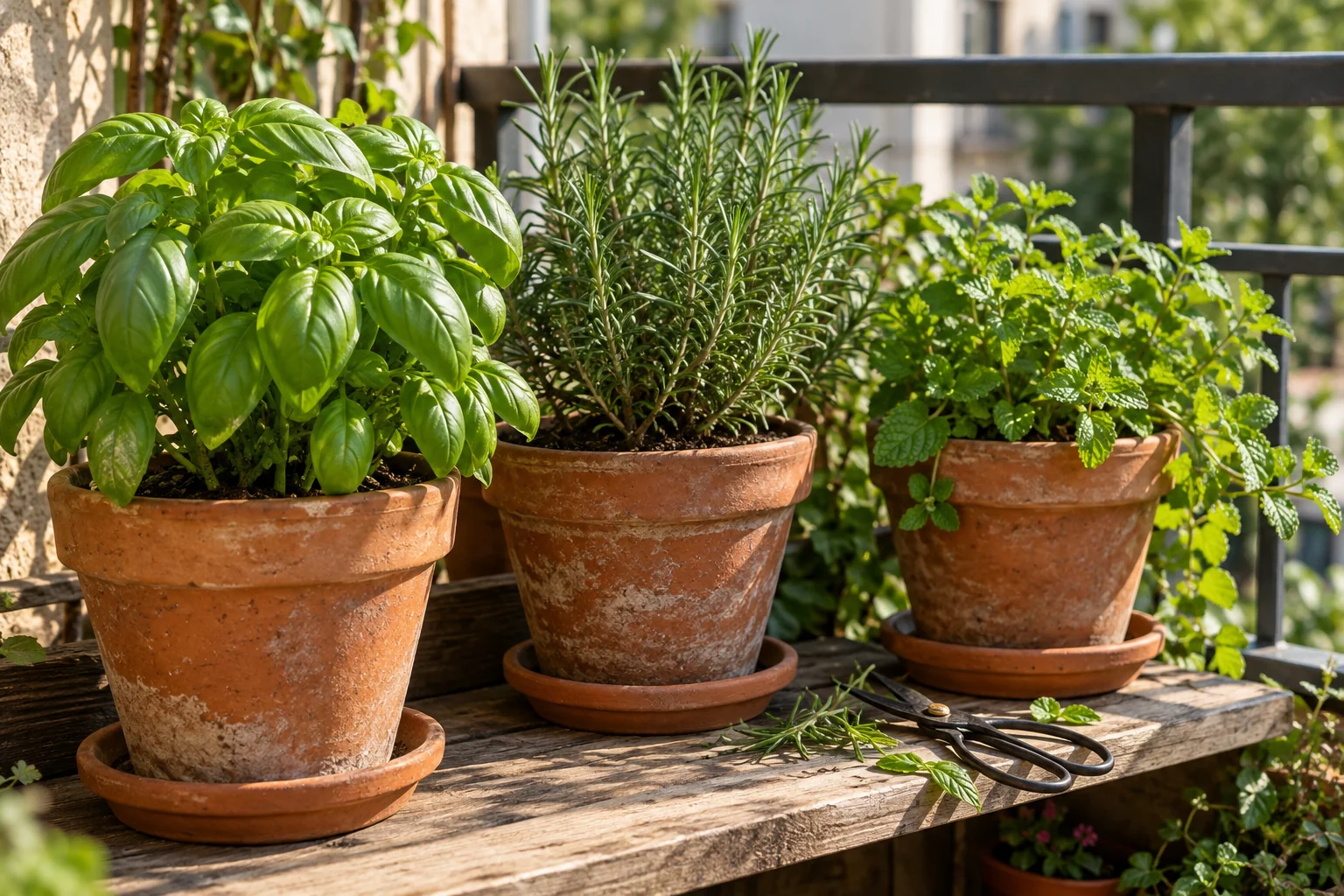
A first herb garden should earn its place near the kitchen. Start with a few herbs you use regularly rather than collecting every attractive seed packet. Your available light, local weather, and willingness to check the pots matter more than a perfect arrangement of matching containers. A modest first planting gives you time to learn how the space behaves before expanding into a larger and more demanding collection.
Match plants to the place
Observe the intended location through the day and write down when it receives direct sun. Check the growing requirements of each herb you are considering against those observations and your local climate. The RHS distinguishes herbs with different moisture and growing needs, so do not assume all kitchen herbs belong in the same pot. Put the first containers where you will notice them during an ordinary day. A distant picturesque shelf is less useful if you forget to inspect it. Keep the plant labels and record the variety names so later care questions refer to the actual plants.
Give each pot a clear job
Choose containers with drainage and use a growing medium suited to the selected herbs, following the plant and compost guidance. Allow room for the expected growth rather than arranging tiny nursery plants tightly for an instant photograph. Keep vigorous mint in its own container, as the RHS recommends. Before filling a heavy pot, decide where it will stay and make sure water can drain without creating a nuisance below. Label each container and add the planting date to your notes. Separate pots make it easier to adjust location or watering when one herb behaves differently from another.
Learn from a small first harvest
Check the plants regularly and follow species-specific harvesting guidance, taking modest amounts while they establish. Keep a simple kitchen note about which herbs you use and which remain untouched. If a plant struggles, record the light, watering observations, and weather before replacing it; buying another of the same plant without changing the conditions may repeat the problem. At the end of the first season, expand the herb that was useful and suited the site. Leave space for maintenance and harvesting so the garden stays practical rather than becoming a crowded display you avoid disturbing.
Before you begin
- List three herbs used in your cooking.
- Observe the location through the day.
- Check each selected plant’s care requirements.
- Choose draining containers and appropriate medium.
- Record planting dates and actual harvest use.
Your first success is a small set of healthy herbs that reaches the kitchen. Let plant requirements and actual use guide the next purchase, and expand only after learning what grows comfortably in your particular space.
RHS: growing herbs in containers
Plan your project with Remendia