Which tools to buy for your first woodworking project
Buy for a sequence of tasks, then build the kit as your projects grow.
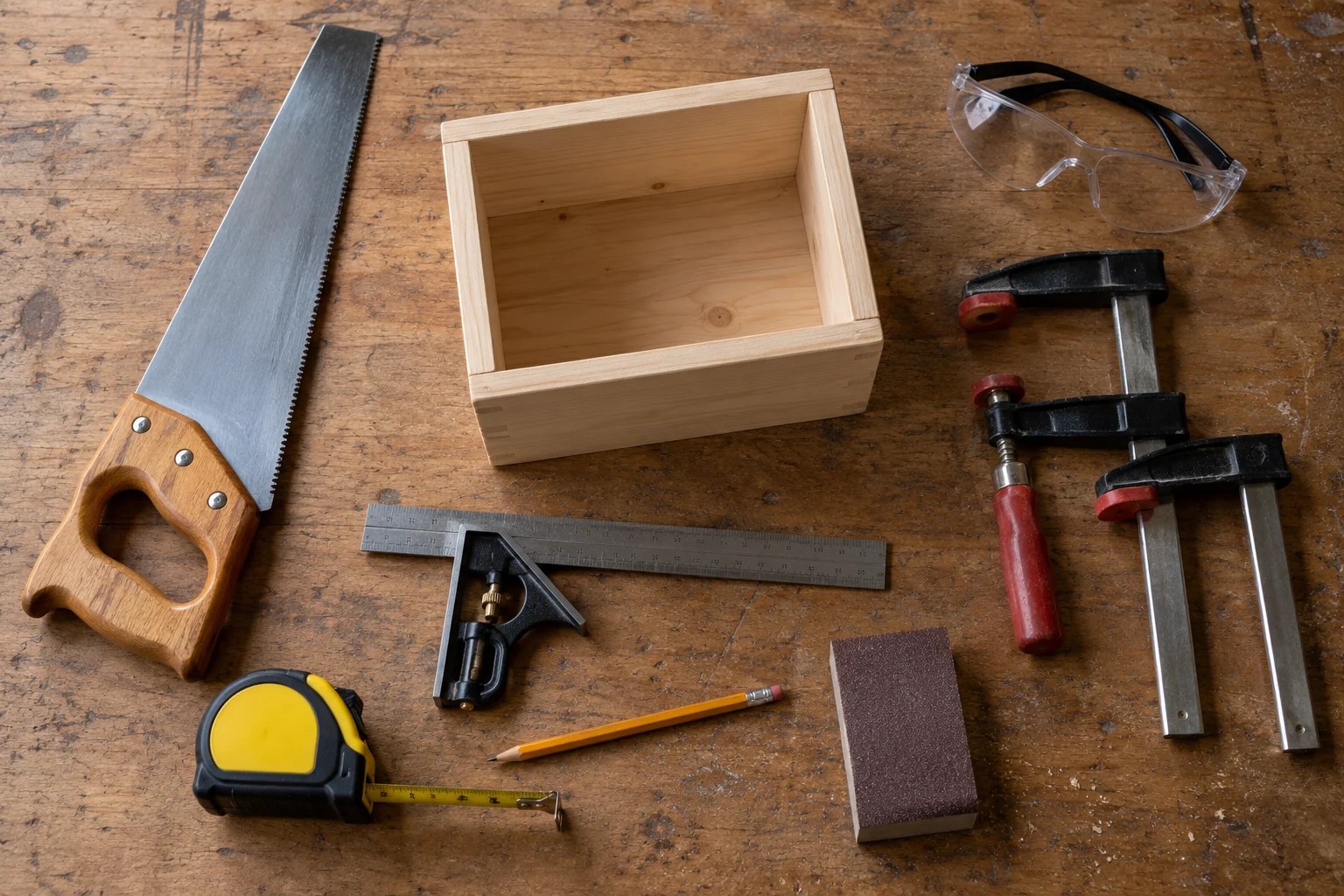
Tool collections can grow faster than woodworking skills. A better starting point is one modest project and a list of the operations it requires. Measuring, marking, holding, cutting, assembling, and finishing are separate needs; buying a large set does not necessarily cover them well. Choose tools you understand, include the equipment needed to use them safely, and allow yourself to outsource a difficult operation instead of purchasing a machine immediately.
Map the project before shopping
Sketch the result and identify each component. Record which dimensions are fixed by the object’s purpose and which can change to suit available material. Then list the operations required, including preparation and cleanup. Ask a material supplier whether suitable components can be cut to size, and confirm the tolerances they offer. That service may remove an unfamiliar operation from the first project. Create a shopping list from this task map, separating essential tools, consumable materials, and items that can be borrowed. Avoid counting an unavailable borrowed tool as part of the plan.
Cover accuracy and workholding first
A dependable measuring method, clear marking tools, and suitable workholding support many different projects. Check that each clamp can reach the place you need to hold and fit around the chosen work surface. Practice measuring and marking on spare material before touching the final components. Read the instructions for every new tool and follow the specified safeguards; woodworking hazards include both the equipment and exposure to dust or finishing chemicals. Include the appropriate protective equipment and dust controls in the budget rather than treating them as optional additions after the tools arrive.
Build a kit you can maintain
Store tools so their working edges and measuring surfaces are protected, and keep instructions accessible. Label small consumables by type rather than leaving mixed hardware loose in a drawer. After the first project, note which tool was missing, which was awkward, and which stayed unused. Use those notes to guide the next purchase. Consider storage space, replacement consumables, and maintenance before adding a powered tool. A short list of well-understood tools is easier to maintain and use consistently than an assortment whose capabilities and condition you cannot readily judge.
Before you begin
- Choose one modest first project.
- List operations before tools.
- Confirm any supplier cutting service.
- Include workholding and protective equipment.
- Review purchases after completing the project.
A useful starter kit is a route to completing a project. Buy the next tool when you can name the task it solves, where you will use it, and how you will store and maintain it.
OSHA: woodworking hazards and solutions
BESSEY: clamping tool questions and guidance
Plan your project with Remendia