How to choose and set up your first workbench
Measure your working area, check stability and clamp access, and buy only the equipment your first projects require.
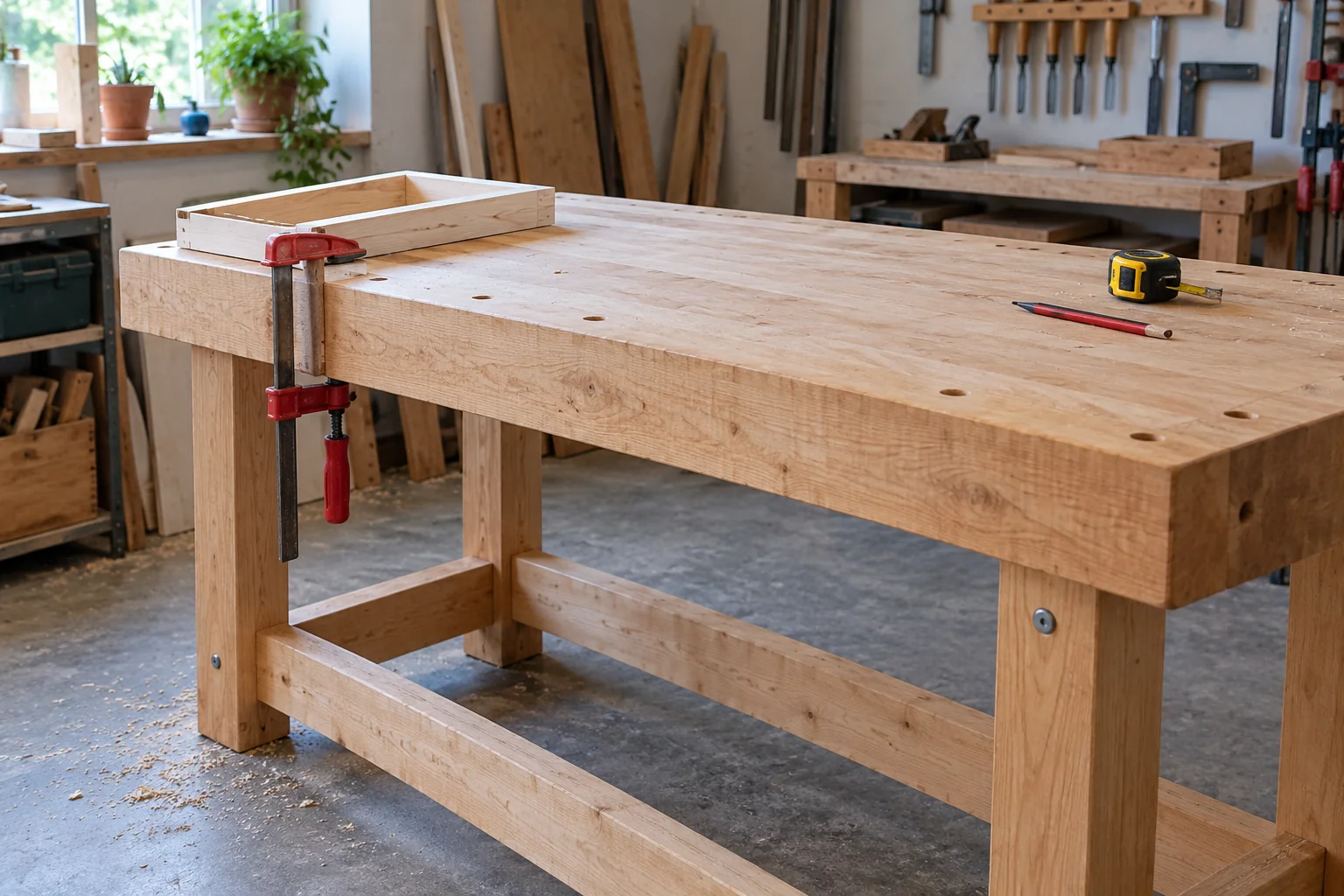
Choose a workbench around the work you need to do: repairing a chair, assembling a shelf, maintaining a bicycle or building a small wood project. Each job needs a stable surface, but the space, clamping and storage requirements differ. Before you compare benches, write down your next three projects and measure their largest parts. Use those measurements to check a proposed bench in your room. This guide takes you from that first layout test to a working setup, without buying a wall of tools you may not use.
Measure the bench and the space around it
Record the available width and depth, then mark the proposed bench footprint on the floor with removable tape. Include open drawers, a pulled-out stool and any cabinet doors. Walk the normal route through the room and check that doors, controls and equipment remain accessible. A bench that fits against the wall can still obstruct the room once you are working at it. Next, place cardboard or an existing tabletop at the intended working position. Try reaching the back edge and handling the largest part from your project list. Check whether you need access from one side, both ends or all around. Record the maximum footprint that passed this test; use it as a limit when browsing, rather than increasing it to fit a tempting product.
Match the bench format to your routine
A fixed bench makes sense when you can leave the work area assembled. Check that its base supports the tasks you intend to perform and that its installation requirements suit the room. Built-in storage can keep equipment close, but drawers and cabinets may limit where you can place clamps or sit. Look at the underside and edge of the top, not just the front photograph. A folding bench is useful when you must clear the room after each session. Check the open and folded dimensions, its carrying weight and the locking procedure. A mobile bench needs suitable locking arrangements for the intended work. Follow the manufacturer’s setup instructions: portability does not make every bench suitable for every task.
Check the specifications before ordering
Read the stated load rating and the conditions attached to it. Check whether it applies to the whole bench, the top or an individual shelf. Include the weight of equipment you plan to leave on the bench. Do not assume a rating covers every concentrated load or type of work. If the instructions require fixing or anchoring, include that installation in your plan. Check the top’s thickness, edge profile and access underneath. Compare these details with the clamps or vise you intend to use. Confirm which accessories are included and which require a separate purchase. Before paying, compare the delivered price with any required mounting hardware and accessories. Save the product specifications with your measurements so you can check the assembled bench against the order.
Set up the surface for your first project
Keep the central work area clear. Place measuring and marking tools where you can reach them without crossing the workpiece. Use a tray for screws, small components and parts awaiting assembly. If the bench must serve other purposes between sessions, the tray lets you move the project without losing its order. Position task lighting so you can see the working area, and route cords away from the work and walking paths. Plan dust control and other precautions for the tools and materials you will actually use. Follow the equipment and product instructions before starting; a workbench purchase does not replace the preparation required for woodworking or finishing.
Test the setup before adding storage
Run through a dry assembly or a simple repair before fitting permanent tool storage. Check whether a clamp can reach the intended position, whether the workpiece stays within your usable space and whether you can retrieve the tools you need. Note any task that makes you put parts on the floor, move unrelated equipment or reach across the work. Change the layout to solve those specific problems. Buy extra drawers, a tool panel or additional clamps only when you can name the job they will do. At the end of the session, return tools to their positions and clear the top. The test is whether you can start the next project without first reorganizing the bench.
Before you begin
- Record the largest parts from your next three projects.
- Test the bench footprint, access routes and open drawers.
- Check setup, load-rating and anchoring requirements.
- Confirm access for your clamps or vise.
- Include delivery and required accessories in the total cost.
- Prepare lighting, parts storage and task-specific dust control.
Choose the smallest bench that supports your planned work, fits the room in use and meets the manufacturer’s setup requirements. Buy the bench and workholding equipment first. Add storage after a real project shows what you need to keep within reach.
OSHA: woodworking hazards and solutions
Plan your project with Remendia