How to build a watering routine for your garden
Replace automatic habits with a short daily check.
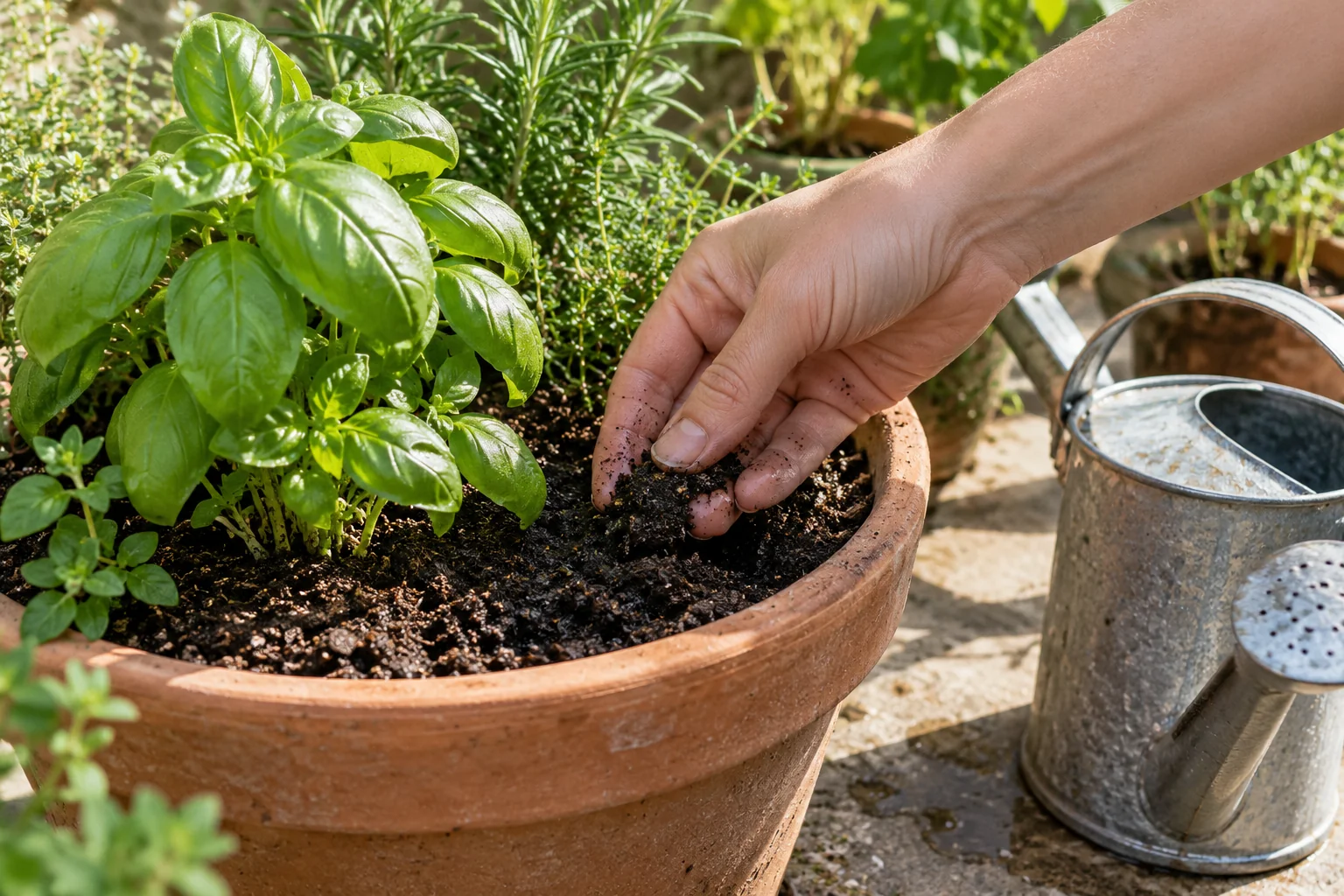
A useful watering routine is an inspection routine, not a promise to pour the same amount into every pot each evening. Plants, containers, and weather differ, and those differences change through the season. Start by making it easy to notice what needs attention. Group your observations, keep the watering equipment convenient, and adjust to actual moisture rather than trying to remember an arbitrary schedule for the entire garden.
Divide the garden into care groups
List containers, newly planted areas, and established beds separately. Note plants that need different conditions and keep their care labels available. The RHS advises against a single fixed watering schedule because needs vary with weather, soil, and establishment. Put the thirstiest or most easily overlooked containers on your regular walking route if their light requirements allow. Make a simple map for anyone who may water while you are away. A numbered pot and a short note are easier to follow than instructions that depend on recognizing every species or remembering which corner dries out fastest.
Check moisture before deciding
Inspect the growing medium as well as the leaves. For many containers, the RHS recommends checking beneath the surface rather than judging by its colour alone; follow any specific needs of the plant. Notice whether rain actually reaches pots under eaves or dense foliage. Apply water to the root area and allow it to soak in rather than repeatedly splashing the leaves. Keep a brief note when a container behaves unexpectedly, such as drying much faster than its neighbours. Investigating drainage, location, and plant size is more useful than automatically adding it to a larger daily watering quota.
Make the routine easy to hand over
Keep a usable watering can near the route and label anything that needs special care. For holidays, show the helper how you assess the pots and walk through the garden together instead of leaving only a calendar. If you choose an automatic system, test its actual delivery and the resulting moisture before going away; automation still needs adjustment and observation. Review the arrangement after a spell of changed weather. Reduce the number of demanding containers if the routine consistently exceeds the time you have, rather than building a garden that depends on constant rescue watering.
Before you begin
- Separate containers from established beds.
- Keep plant-specific requirements accessible.
- Check moisture beneath the surface.
- Notice rain-shadow locations.
- Trial holiday care before leaving.
The habit to build is checking, then responding. A small set of clear observations produces better decisions than a rigid calendar and helps another person care for the garden without guessing what each plant needs.
Plan your project with Remendia