How to plan and finish a handmade wood gift
Use thoughtful proportions and a tested finish instead of complicated construction.
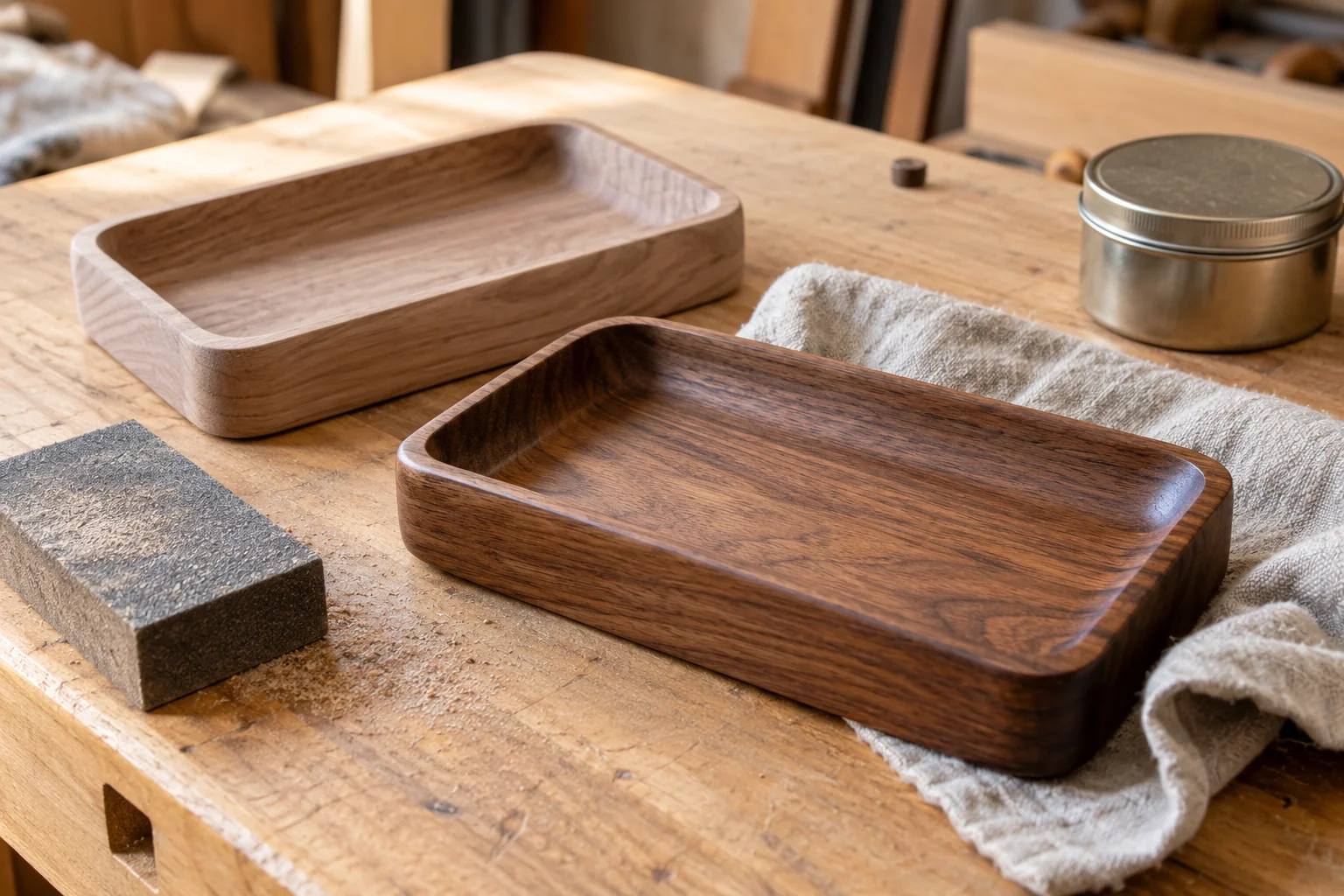
A small handmade gift can feel special because it fits the recipient’s daily life. A tidy desk tray, a display stand, or a simple organizer offers room for care without requiring elaborate joinery. Start with how the person will use it, then choose the material and finish. The work is easier to manage when the shape stays simple and you leave enough time to test the surface treatment properly.
Choose a gift around a real habit
Think about a specific routine: where the person puts keys, arranges postcards, or leaves a notebook. Measure representative objects and make a quick paper or cardboard version to check access and proportions. Keep the first gift away from uses that introduce unfamiliar performance requirements, such as food contact, heat exposure, or supporting a child. Personalization can come from dimensions, a thoughtful color choice, or a short inscription. You do not need to add several techniques at once. Make one feature the focus and keep the rest of the object deliberately uncomplicated.
Test the complete finish on a sample
Use a piece of the same material to test preparation and finish according to the product instructions. Record the exact product and the sequence used so you can reproduce the result. Look at the sample under the lighting where the gift is likely to be seen, and check how visible edges and end grain appear. Follow the stated ventilation, protective equipment, application, curing, and waste-handling directions. Wood dust and finishing products require appropriate precautions; a small gift is still a woodworking project. Keep the sample until the final piece is complete.
Finish the presentation with useful care notes
Inspect the object in normal use rather than only from its best photographic angle. Check that it sits as intended, that accessible surfaces feel properly finished, and that personalization is spelled correctly. Allow the finish to reach its specified readiness before wrapping. Include a short care card based on the actual materials and finish, not a generic claim that the object is waterproof or maintenance-free. Package it so the surfaces cannot rub against hard accessories in transit. A simple note explaining why you chose the design can make the gift feel more personal than an additional decorative feature.
Before you begin
- Choose one recipient’s practical routine.
- Mock up the size.
- Test the finish on matching material.
- Allow the specified cure before wrapping.
- Include accurate care instructions.
A personal wood gift succeeds when it is pleasant to use and carefully finished. Keep the construction manageable, test the details, and invest the saved effort in a result that fits the recipient rather than a showpiece technique.
OSHA: woodworking hazards and solutions
Plan your project with Remendia