How to organize your garage in a weekend
A realistic reset that starts with the floor, not a shopping cart.
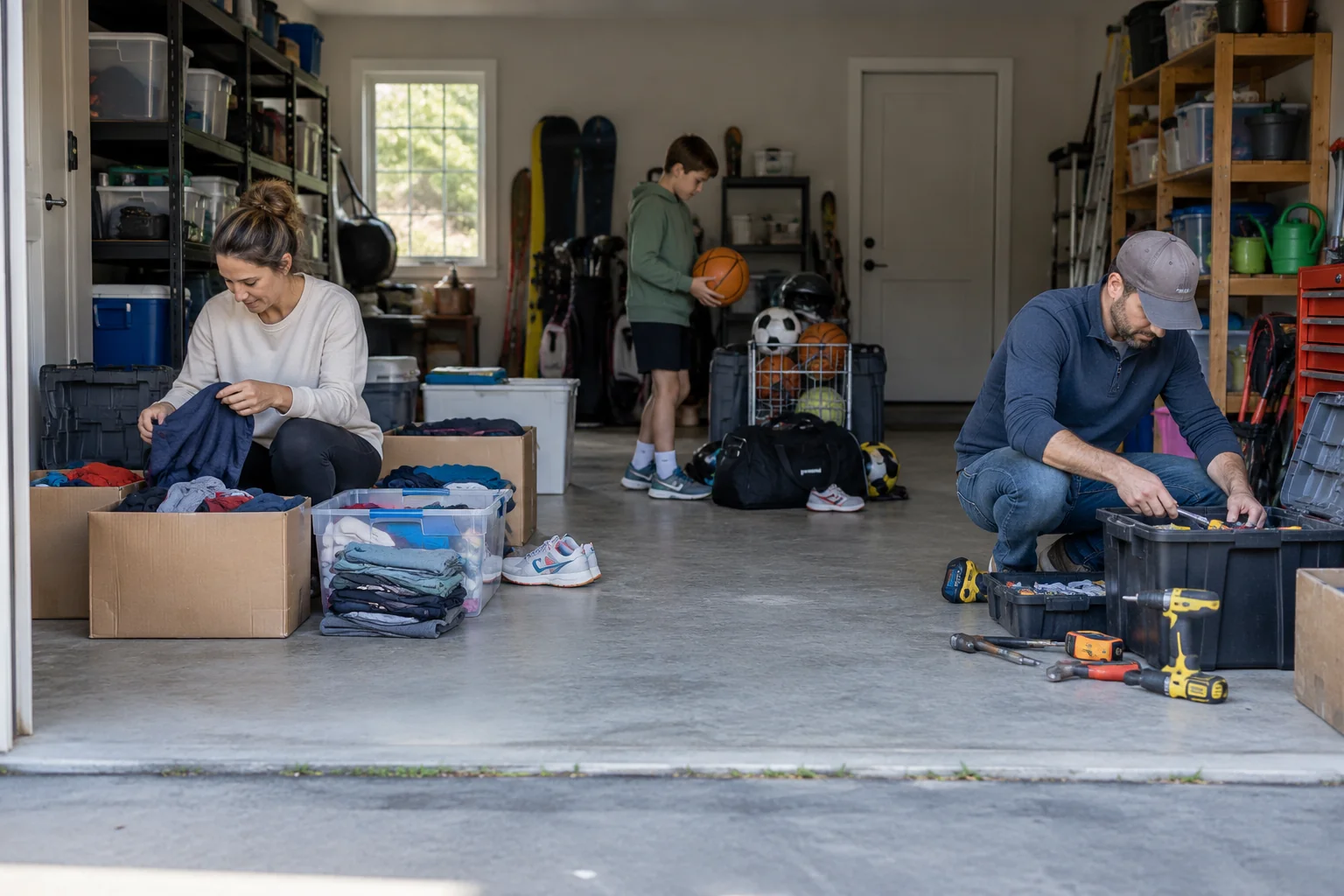
A garage reset becomes manageable when the goal is specific. Being able to park, find the bike pump, or open a workbench is a better finish line than organizing everything you own. Choose one of those outcomes before moving a box. This plan works with your existing containers first, keeps decisions small, and leaves the last part of the weekend for actually removing the things you no longer need.
Saturday morning: open one useful route
Take a photograph from the doorway and identify the route you use most often. Clear that route in small sections instead of emptying the entire garage onto the driveway. Set up separate places for keep, donate, repair, and dispose. Give the repair group a firm limit: write the next action and a date on each item, or reconsider keeping it. Keep labels and contents together. For paint, automotive fluids, and unfamiliar chemicals, follow the container instructions and local disposal rules; EPA advises keeping hazardous products in their original labeled containers.
Saturday afternoon: give things an address
Group the remaining items by the job they serve: bicycle care, car cleaning, gardening, or household repairs. Put the things used together in the same accessible area. Use temporary paper labels before buying matching boxes. Check whether a container can be lifted comfortably when full and whether its contents can be identified without opening every lid. Leave one small landing zone for incoming items, but give it an emptying routine. If a shelf requires an anti-tip attachment, install it according to its instructions before loading it.
Sunday: test the garage as a room
Move through the ordinary routines that the garage needs to support. Open the car doors, roll a bicycle outside, retrieve the toolbox, and return it. Any step requiring you to move unrelated belongings points to a layout problem. Adjust those areas before spending on additional storage. Photograph donations and book their actual departure, then take the disposal items to the appropriate service. Finish by writing a short inventory of the remaining storage gaps, including the dimensions of what must fit. Shop from that list rather than the original mess.
Before you begin
- Choose one visible finish line.
- Mark keep, donate, repair, and disposal areas.
- Label groups by activity.
- Test car doors and access routes.
- Arrange removal before the weekend ends.
A successful reset leaves a usable floor and a system you can maintain. Matching bins can wait. The most valuable result is knowing where each activity belongs and what must leave the garage next.
EPA: household hazardous waste
CPSC: preventing furniture tip-overs
Plan your project with Remendia