How to measure an outdoor dining area
Test seats, serving space, and the route from the kitchen.
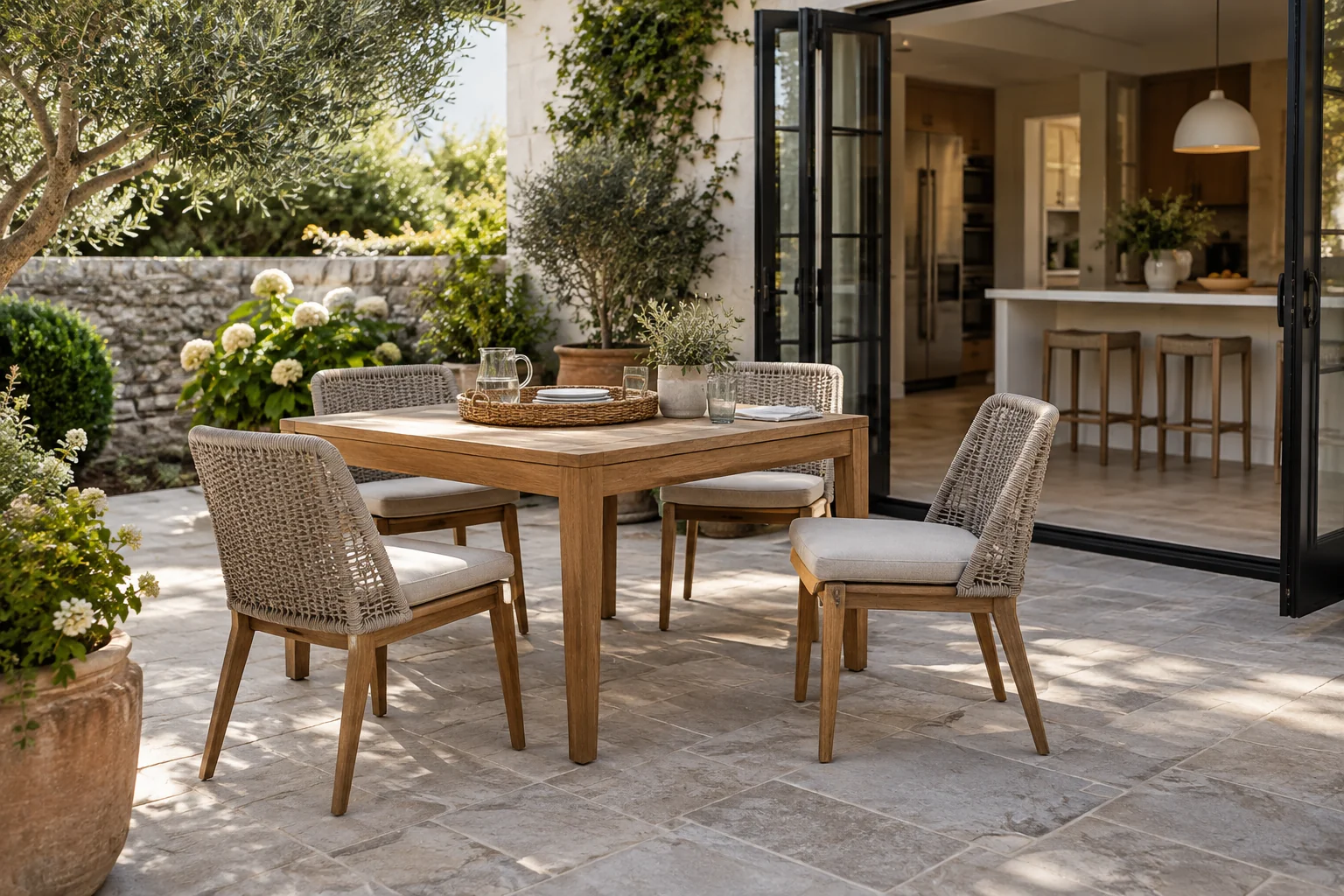
A dining table fits an outdoor space only when dinner fits around it. Chairs need to move, someone needs to bring food from the house, and the group needs somewhere for a serving dish. Instead of relying on a universal spacing rule, create a full-size trial using your household, the proposed furniture dimensions, and the routes you actually use. This makes the decision useful for both compact patios and larger gardens.
Start with the usual guest count
Write down how many people eat outside most often and how often larger gatherings happen. Set the equivalent number of place settings on an existing table, including the plates, glasses, and serving dishes you normally use. Measure that arrangement to understand your preferred dining surface. For a candidate table, check the position of legs and supports against the seats: a manufacturer seat count does not tell you whether everyone has comfortable access. If extra guests are rare, compare a separate temporary table with a permanently oversized one before sacrificing everyday circulation.
Mark chair movement as well as the top
Tape out the proposed tabletop and place chairs around it. Ask each person to sit, pull back, and stand while the neighbouring seat is occupied. Then walk the main route with a tray and test the door swing. Record the clear space that worked in your actual trial; it is more valuable than guessing from an empty plan. Include any mobility aids used by household members or guests and check relevant accessibility requirements where applicable. If the layout feels tight, change orientation or table shape before assuming a smaller chair will solve everything.
Find a home for the serving work
Notice where you put a hot dish, empty bottle, or extra plate during the trial. A small side surface near the door may reduce clutter on the dining table, but it should not narrow the route you just tested. Keep cooking equipment separate and follow its manufacturer clearance requirements rather than treating spare patio space as permission to place it anywhere. Decide where tableware will come from and where cushions will go afterward. Add those supporting items to the project only when they solve a demonstrated problem, then recheck the occupied layout before ordering.
Before you begin
- Count regular diners and occasional guests.
- Trial real place settings and serving dishes.
- Check legs and supports against seat positions.
- Test chair movement with neighbouring seats occupied.
- Keep the serving route and door swing clear.
Save the dimensions of the arrangement you tested, not just the table you liked. A comfortable dining plan includes people, movement, serving, and storage, so every purchase can be checked against the same practical layout.
Plan your project with Remendia