How to plan outdoor lighting for paths and seating
Light the places people use and keep the rest gentle.
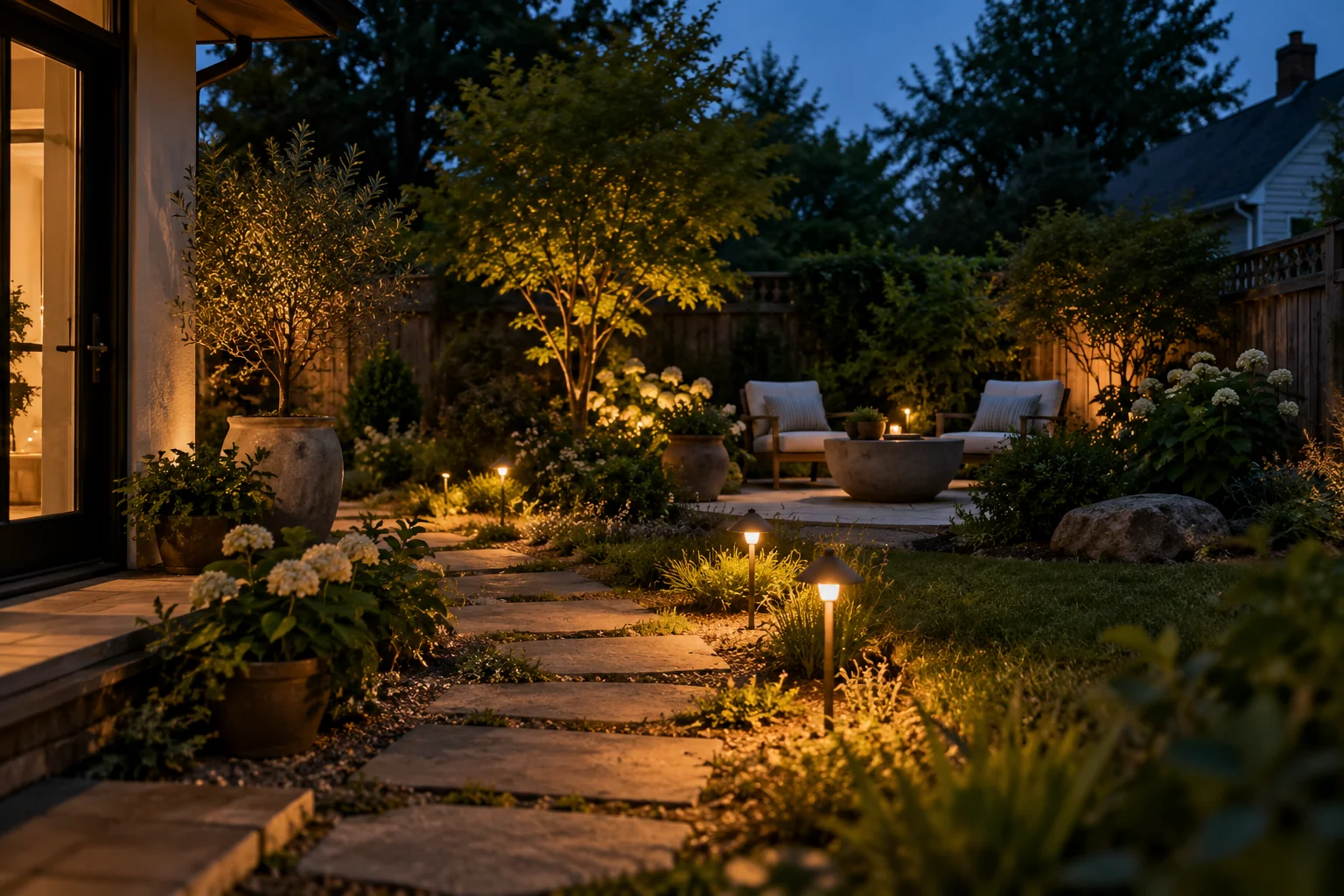
An inviting evening patio does not need every surface brightly illuminated. It needs enough useful light to arrive, move around, see the table, and find the way back inside. Begin by observing the space after dark with the existing lights on. Separate practical visibility from decorative atmosphere, then test the effect with movable outdoor-rated lights before committing to permanent fixtures or a new electrical installation.
Walk the route after dark
Look for changes of level, awkward turns, the door handle, and objects that disappear into shadow. Note the areas you genuinely need to see and any existing light that shines directly into your eyes. Observe the patio from inside the house and from neighbouring sightlines where possible. A fixture can look decorative from above while being uncomfortable at seated eye level. Sketch a short list of lighting tasks instead of starting with a list of products. The Department of Energy highlights directing light to the intended area, an especially useful principle in small outdoor spaces.
Try a small number of light sources
Place suitable portable outdoor lights near the dining or seating area and compare the result from every chair. Move them before increasing their number. Check whether a light helps you see a face, read a menu, or locate the edge of the table; decorative sparkle alone may not achieve those tasks. Choose products explicitly rated for their intended outdoor conditions and follow the supplied instructions. If solar lights are a candidate, assess where their panels receive daylight and test their real evening performance before relying on them for an essential route or change of level.
Plan operation and installation together
Decide how lights will be switched off, charged, stored, or controlled each day. Keep leads out of walking routes and use equipment appropriate to the setting; any new fixed wiring belongs with a qualified electrician. For temporary extension arrangements, follow the cord and appliance instructions rather than assuming an indoor accessory is suitable outside. Ask whether a timer or accessible switch would make the setup more convenient. After a week, remove lights that add glare without helping an activity. Keep a photo of the successful evening arrangement and the actual product details for future replacements.
Before you begin
- Walk the route with existing lights after dark.
- Mark steps, turns, and useful task areas.
- Check glare from every seat.
- Verify outdoor suitability of each product.
- Decide how lights are switched, charged, and stored.
Build the evening layout around visibility and comfort, then add atmosphere selectively. A few well-placed lights with convenient controls are easier to maintain than a large decorative installation that leaves the useful areas dark.
U.S. Department of Energy: outdoor lighting
Plan your project with Remendia