How to choose where to add patio shade
Track the sun before choosing a canopy or umbrella.
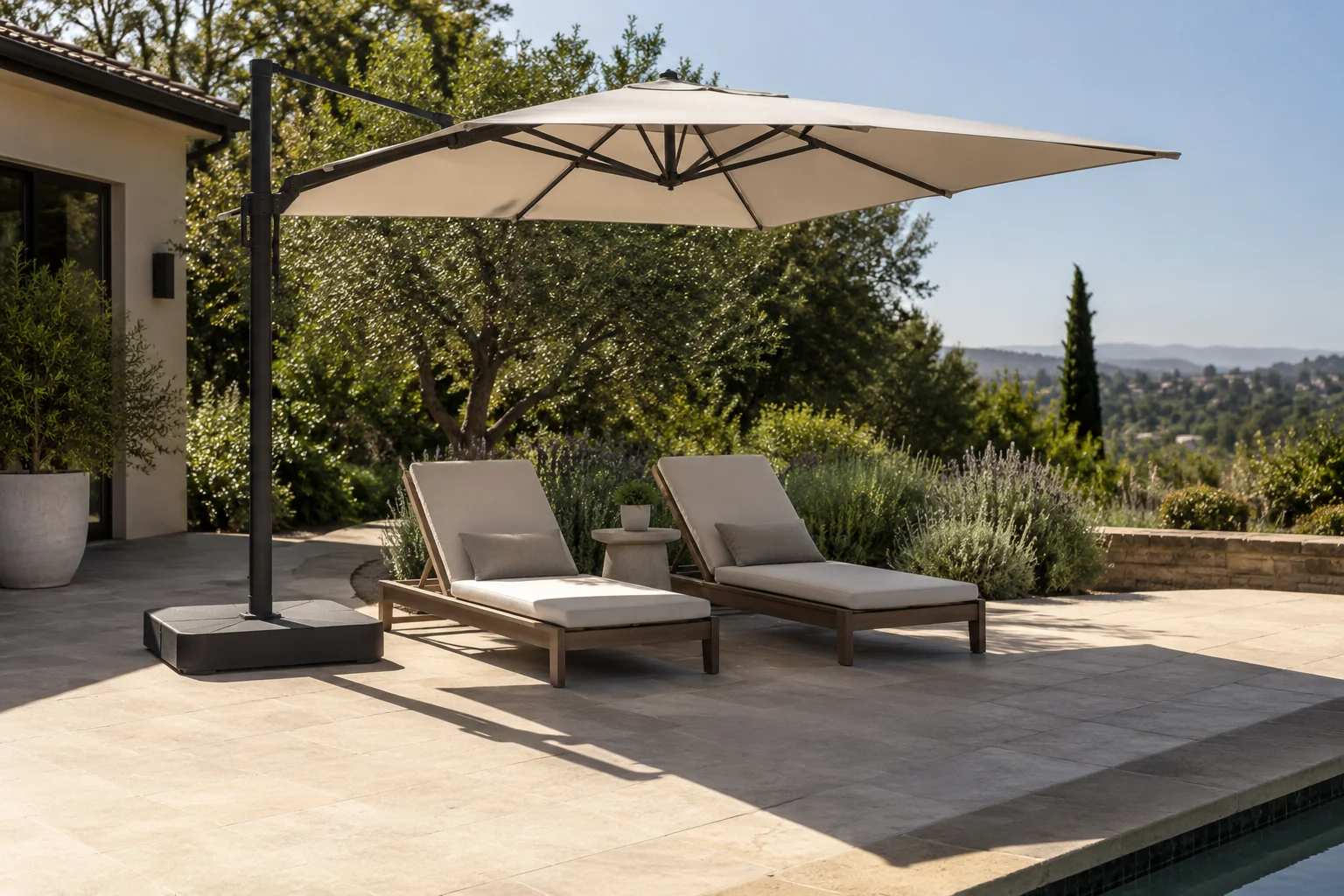
A shaded patio photograph captures one moment. Your lunch table may be in shade in the morning and fully exposed when you want to use it. Before choosing an umbrella, awning, or other shade solution, map the hours that matter to your household. A good plan considers moving shadows, the footprint of supports, storage, and the instructions for the specific product, rather than buying by canopy width alone.
Observe at the intended time of use
Take photographs from the same spot at the times you would normally sit outside. Mark the sunny and shaded portions on a rough plan, along with the seats you want to protect. Repeat on another clear day if the first observation was interrupted by cloud. Note the date, because the sun position changes through the year. Existing walls and trees may already provide useful shade for part of the day. Try moving the seating arrangement first; the easiest solution can be matching an activity to a naturally sheltered location rather than covering the entire patio.
Compare the complete footprint
For an umbrella, include the base, pole, opening mechanism, and any offset support in the layout. Check the manufacturer guidance for a compatible base and operating conditions; do not substitute a guessed weight. Make sure you can open, close, and store the product without reaching over furniture awkwardly. For fixed shade structures, treat support design and installation as a separate professional assessment where needed. A broad sail in a picture does not establish that your existing wall or fence is suitable for its loads. Preserve access to doors, drains, and the walking routes you already rely on.
Distinguish comfort from sun protection
Shade can make a seat more pleasant, but it does not mean all ultraviolet exposure disappears. The American Cancer Society recommends combining shade with other sun-protection measures rather than relying on shade alone. Check any protection claims for the specific fabric instead of inferring them from colour or thickness. Build a practical routine for closing or storing movable shade according to its instructions, and designate who handles it when weather changes. After setup, repeat your original photo observations from the actual seats to see whether the shade falls where the project needed it.
Before you begin
- Photograph sun at your usual outdoor hours.
- Record the observation date.
- Mark bases and supports on the layout.
- Verify manufacturer installation and operating instructions.
- Check the finished shade from each seat.
Buy shade for a particular place and time of use. A measured plan helps you choose the right type of support and coverage, while product instructions determine installation, safe operation, and what protection the material actually offers.
American Cancer Society: sun-safe outdoor time
Plan your project with Remendia