How to plan a raised garden bed
Choose crops, access, and soil before buying a kit.
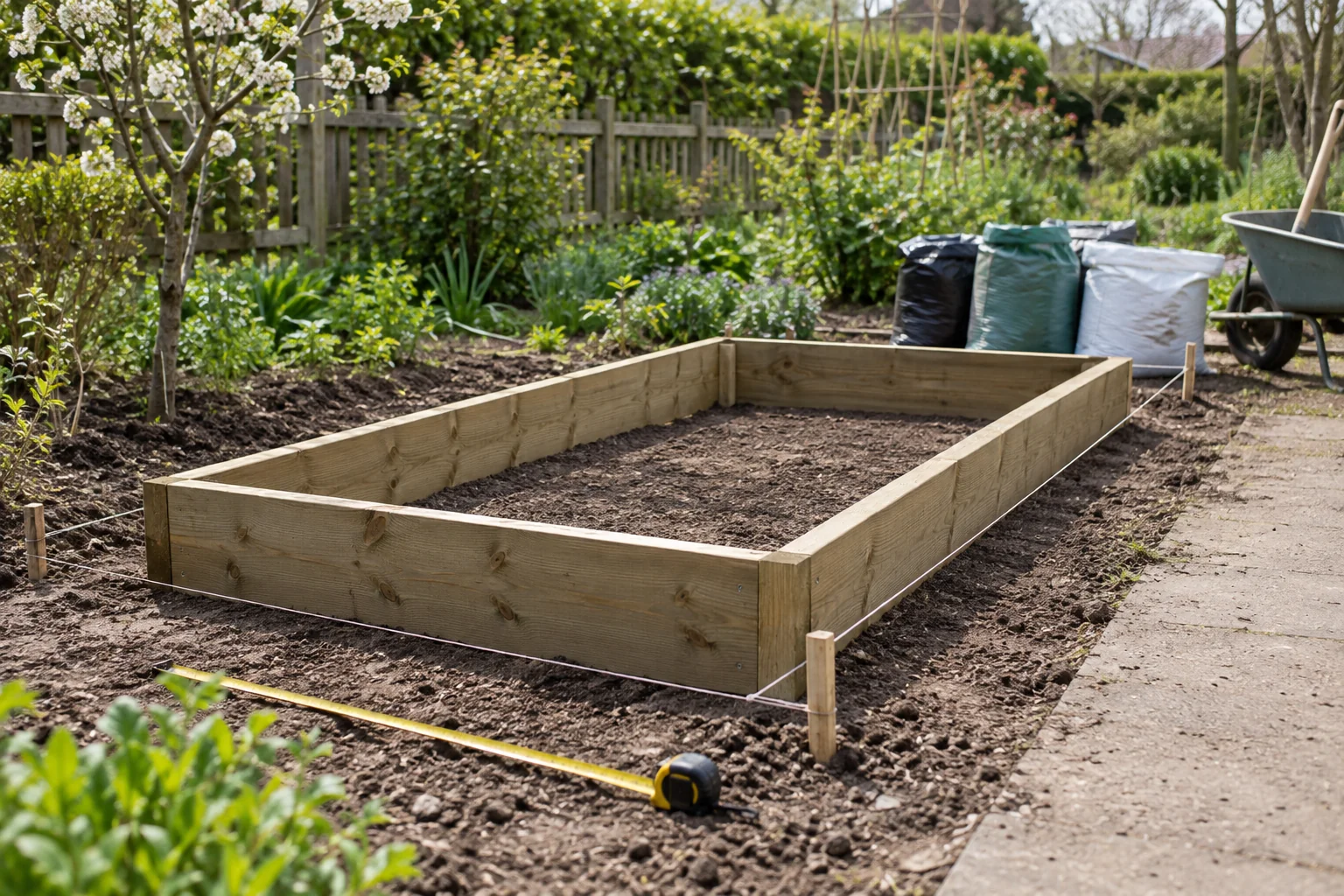
Raised beds can make a garden easier to organize, but the frame is only one part of the project. The crops need suitable light and growing material, and you need to reach them without making maintenance awkward. Start with the reason you want a raised bed: access, an organized growing area, or improved growing conditions. That purpose should determine the size and position instead of the most attractive kit photograph.
Choose a crop list and a location
Write a short list of plants you want to grow and check their mature size, spacing, light, and soil needs. Observe the proposed area over a day and note the path to water and tool storage. The RHS notes that the appropriate bed size and depth depend on the crops. Mark a proposed outline on the ground and reach toward its centre from every accessible side. Adjust it to your own comfortable reach. If a side sits against a wall, do not assume you can maintain the bed as though it were accessible from all directions.
Budget for everything inside and around it
Calculate the growing volume from the proposed internal dimensions, then obtain advice on a suitable filling mixture for the crops and setting. Include delivery access and the effort of moving material to the bed. The RHS explains that raised beds are generally best placed on free-draining ground; hard-surface installations require drainage planning. Check the support and load suitability of any elevated terrace or balcony before placing a filled bed there. Add room for a watering can or wheelbarrow beside the bed, because a narrow decorative path can become inconvenient when you are carrying supplies.
Plan a manageable first planting
Sketch the mature plant positions rather than filling every gap with a seedling. Keep labels, seed packets, and planting dates together so you know what to expect. Begin with a selection you can inspect and maintain regularly, leaving any ambitious additions for a later season. Think through how you will reach the plants for harvesting, replace a failed crop, and store coverings when they are not needed. Review the full cost before buying the frame: growing material, plants, delivery, and everyday access are part of the same project, even if they appear in separate shopping baskets.
Before you begin
- Choose crops before selecting bed depth.
- Observe light and the water route.
- Test reach from accessible sides.
- Calculate the internal filling volume.
- Include delivery and maintenance access in the plan.
A raised bed succeeds as a growing system, not simply as a tidy border. Match its dimensions to your plants and reach, and account for drainage, filling material, and access before choosing the frame.
Plan your project with Remendia