How to make a seasonal garden plan
Turn plant notes into a realistic seasonal plan.
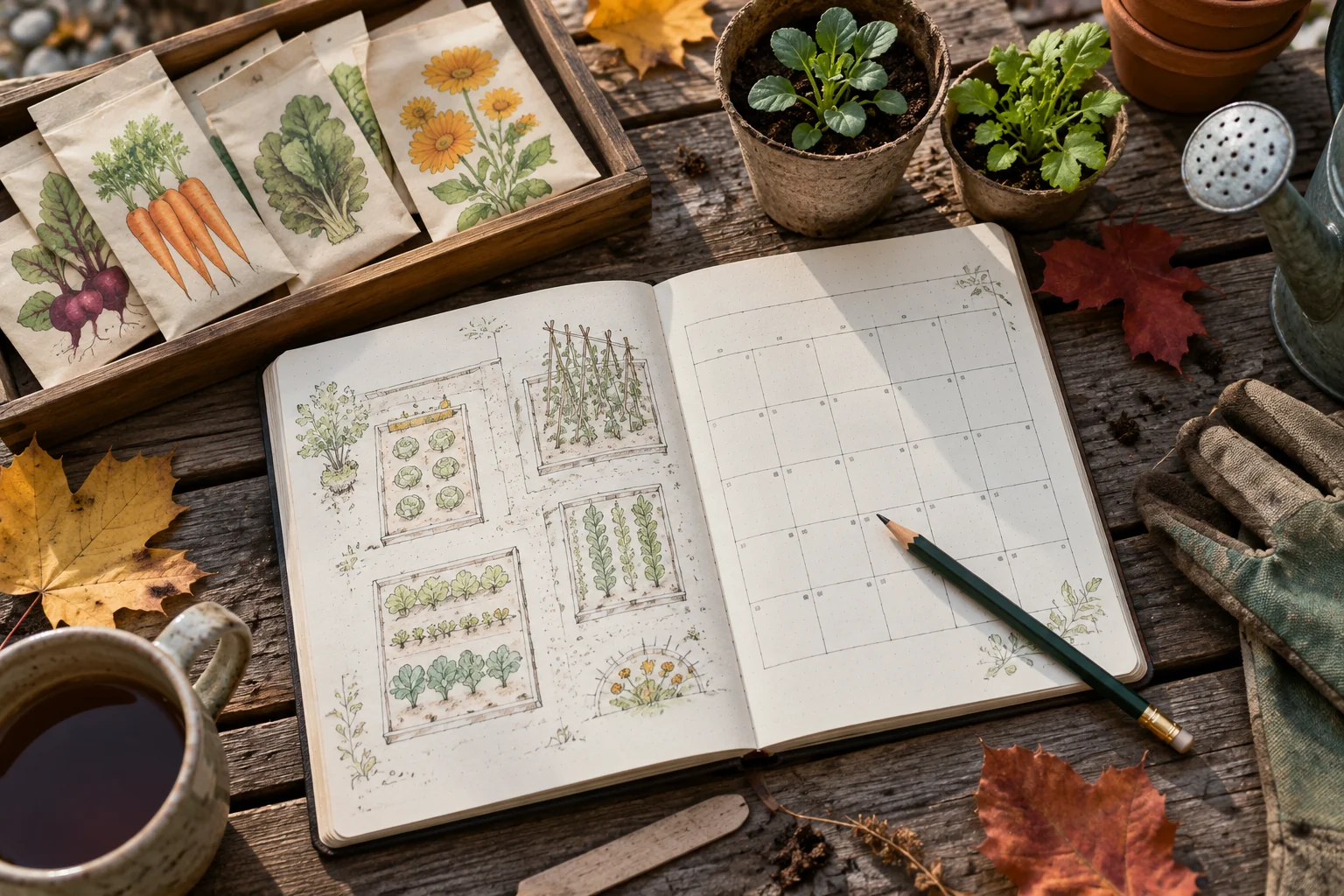
A garden calendar becomes useful when it describes your plants, climate, and available time. A generic list can remind you of possibilities, but it cannot know which crops you grow or when you are away. Begin with a short inventory and build a flexible plan around it. Keep observations from one season so the next plan improves from experience instead of starting with a fresh collection of ambitious tasks.
Build a plant and place inventory
Record the names of the plants already present, their locations, and the care information supplied with them. Add the light and weather patterns you have observed in each area. For crops you want to grow, check locally relevant sowing and planting guidance rather than transferring dates from another climate. The RHS monthly planner suggests organizing both individual crops and recurring garden jobs, a useful structure even outside its UK context. Keep uncertain identifications separate from confirmed ones so you do not apply pruning or feeding advice to the wrong plant simply because it looks similar.
Work backward from available time
Mark holidays, busy work periods, and weekends you can realistically spend outside. Match the scale of planting to the care you can provide during those gaps. Separate fixed appointments, such as a delivery, from weather-dependent tasks that need a suitable window. Group jobs that use the same supplies so preparation happens once. Leave an unassigned slot for the unexpected: replacing a failed plant, changing a container position, or handling a delivery delay. A calendar filled to every edge is difficult to maintain and often encourages buying plants before there is time to prepare their space.
Record outcomes, not just completed tasks
After planting or harvesting, write a short observation: what succeeded, what struggled, and what you would change. Photograph the same areas at intervals so growth and gaps become visible. Record the actual timing of useful harvests rather than only the date on the seed packet. At the end of a season, choose a few changes based on those notes and keep the successful routines. Archive ideas that do not fit next year’s time or space. This gives the next shopping list a reason behind each item and prevents repeating purchases that did not suit the garden.
Before you begin
- Inventory existing plants and locations.
- Check timing against local growing conditions.
- Mark holidays and busy periods first.
- Leave room for weather-dependent changes.
- Record results and next-season adjustments.
A seasonal plan is a living record of your garden, not a list of obligations. Use local guidance to choose appropriate windows, then let your own observations and available time determine what belongs in the next season.
RHS: month-by-month garden planning
Plan your project with Remendia