How to store and rotate seasonal garage equipment
Store by the next occasion, with a simple handover at each change of season.
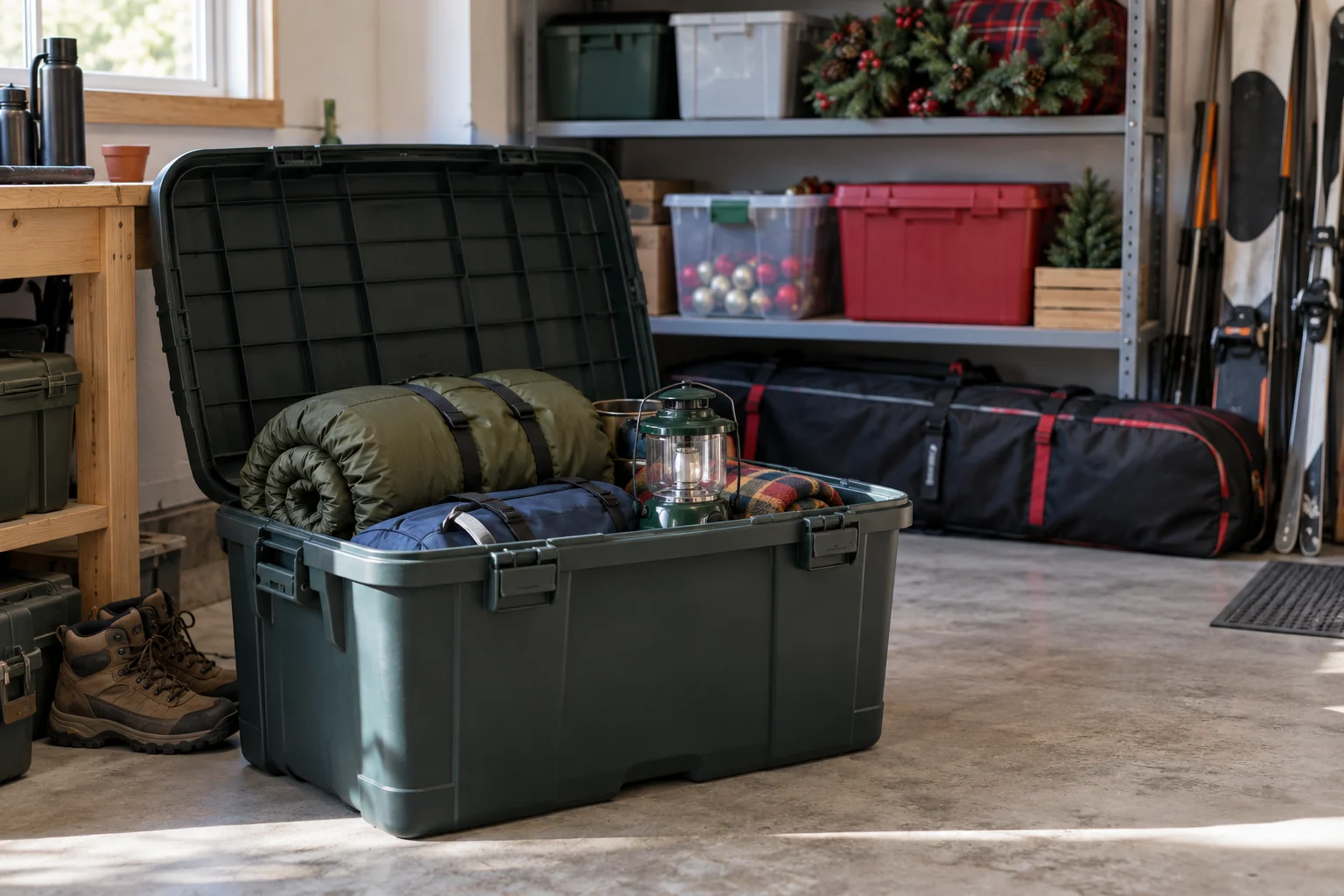
Seasonal belongings are easy to forget because they disappear for months at a time. Instead of organizing only by material or container size, group them around the occasion when you will need them again. Camping, holiday decorating, and winter travel each deserve a clear home and a short readiness note. This turns the next seasonal change into a swap rather than another search through boxes of unrelated equipment.
Close out the season properly
Before packing, inspect the equipment and follow its cleaning and drying instructions. Separate items needing repair from items ready to use. Write specific repair notes while the problem is still fresh: which zipper, missing part, or damaged case needs attention? Photograph a complete kit so you can compare it next time. Do not store damp textiles simply to finish the job quickly. Keep chemicals and maintenance products in their original labeled containers, following their individual storage directions rather than treating them as ordinary contents of a seasonal bin.
Pack for the next opening
Put the first-needed items where they are easiest to reach. A campsite setup kit should not be buried under equipment used only after everything is assembled. Label containers on the side visible from the aisle, and include a concise contents list with unusual items named individually. Use smaller containers for dense belongings so the completed boxes remain manageable. Record the storage location in one shared note. Leave space for new additions without filling every corner; a system that needs perfect packing every time usually becomes frustrating after one busy weekend.
Schedule the handover, not constant tidying
Choose a recurring moment that fits your household, such as the start of a school break, to bring the next group forward. Open it early enough to replace missing supplies without rushing. Move the outgoing group to its longer-term position only after checking and labeling it. Ask whether anything stayed unused for another full season and whether it should be sold, donated, or reassigned. Update the contents list immediately when something leaves a kit. The record should describe what is actually stored, not what the kit originally contained.
Before you begin
- Group belongings by their next use.
- Clean and dry according to instructions.
- Tag repairs before packing.
- Label visible sides with contents.
- Set a seasonal handover reminder.
You do not need a detailed database for every decoration or accessory. A few dependable kit names, honest contents lists, and a regular handover are enough to make seasonal storage useful instead of mysterious.
EPA: household hazardous waste
Plan your project with Remendia