How to pack away a home office in a shared room
A storage routine for rooms that do more than one job.
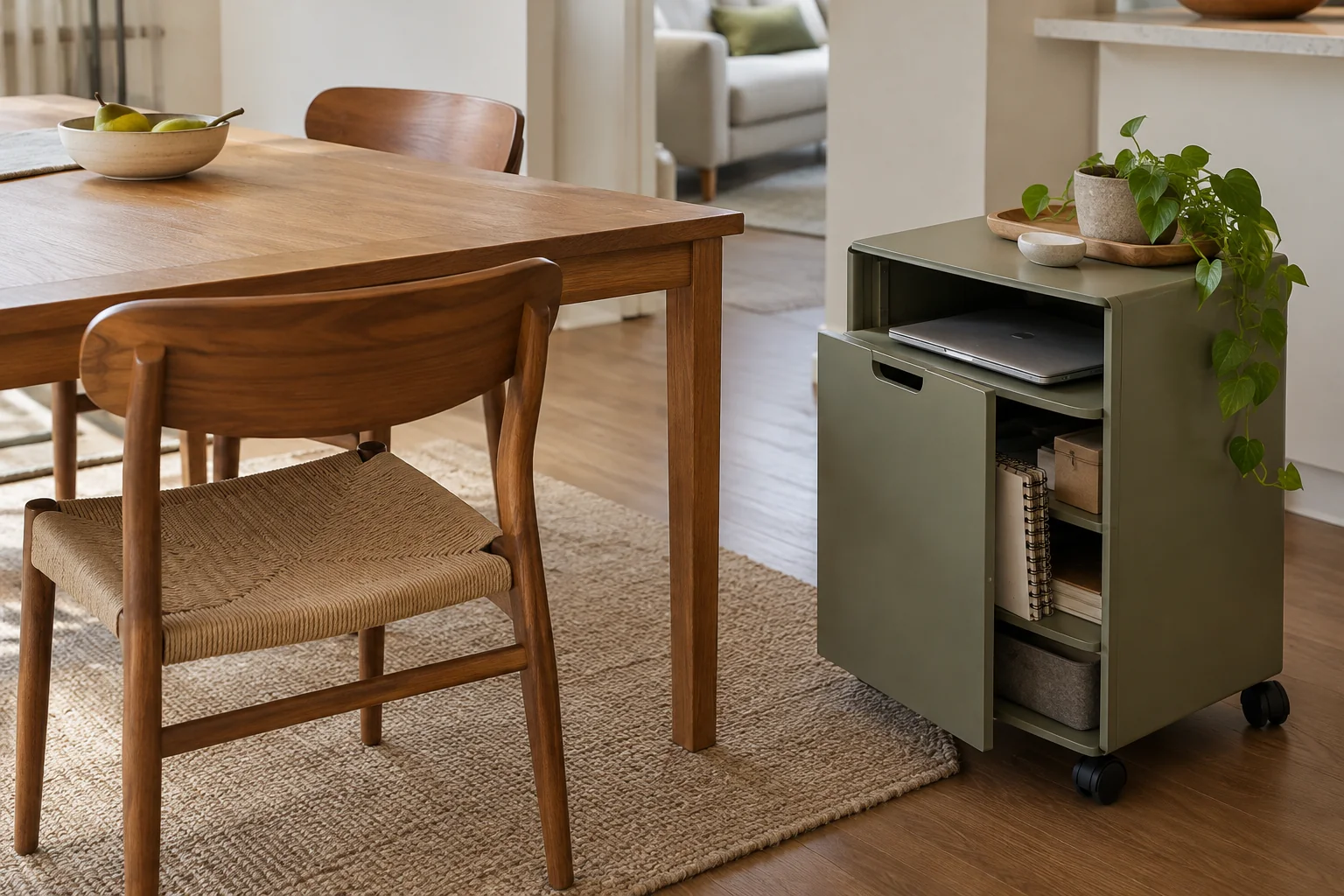
When the office is also a dining room, bedroom, or family room, storage has to support a daily change of use. The goal is not an empty room that takes twenty minutes to turn back into an office. It is a small, repeatable reset that protects current work and gives everyone their space back. Start with the items that travel between the table and a cupboard every day.
Sort by frequency, not appearance
Make three groups: items used during every work session, items needed weekly, and records or supplies kept for later. Put the first group into a temporary tray or box and try carrying it to the work surface. If it is awkward, split it into a desk kit and a paper kit. Leave occasional equipment in a nearby cabinet instead of packing it into the daily container. This practical sorting reveals the capacity you need. It also prevents a visually matching set of boxes from becoming several attractive places to lose the same notebook.
Define ownership in shared storage
Assign a specific shelf or drawer to work and keep household objects elsewhere. Label folders by the action they require, such as reply, file, or current project, rather than creating elaborate categories nobody remembers. Give shared equipment a single home and agree who returns it after use. If private paperwork is involved, choose storage appropriate to who can access the room. Take measurements with the cabinet door open and include handles, hinges, and the space needed to remove a full container. A box that technically fits can still be frustrating to retrieve.
Create a five-action shutdown
Write a short end-of-day sequence using your actual objects: save the document, note the next task, return papers to their folder, place accessories in the tray, and move the tray to its shelf. Adapt those actions until the routine feels easy on a busy day. Keep an unresolved task on a note inside the kit rather than spreading reminders across the dining table. After a week, remove supplies that never left the container and relocate anything repeatedly forgotten. The best storage arrangement becomes simpler with use instead of accumulating more compartments.
Before you begin
- Group supplies by frequency of use.
- Trial a portable kit with existing containers.
- Assign one work shelf or drawer.
- Measure access with doors fully open.
- Write and test an end-of-day reset.
Shared-room storage should make it easy to stop and easy to restart. Buy containers only after testing the routine; the right capacity and access matter more than whether every box belongs to the same collection.
Plan your project with Remendia