How to set up a craft station in a small space
Make starting easy and clearing away predictable.
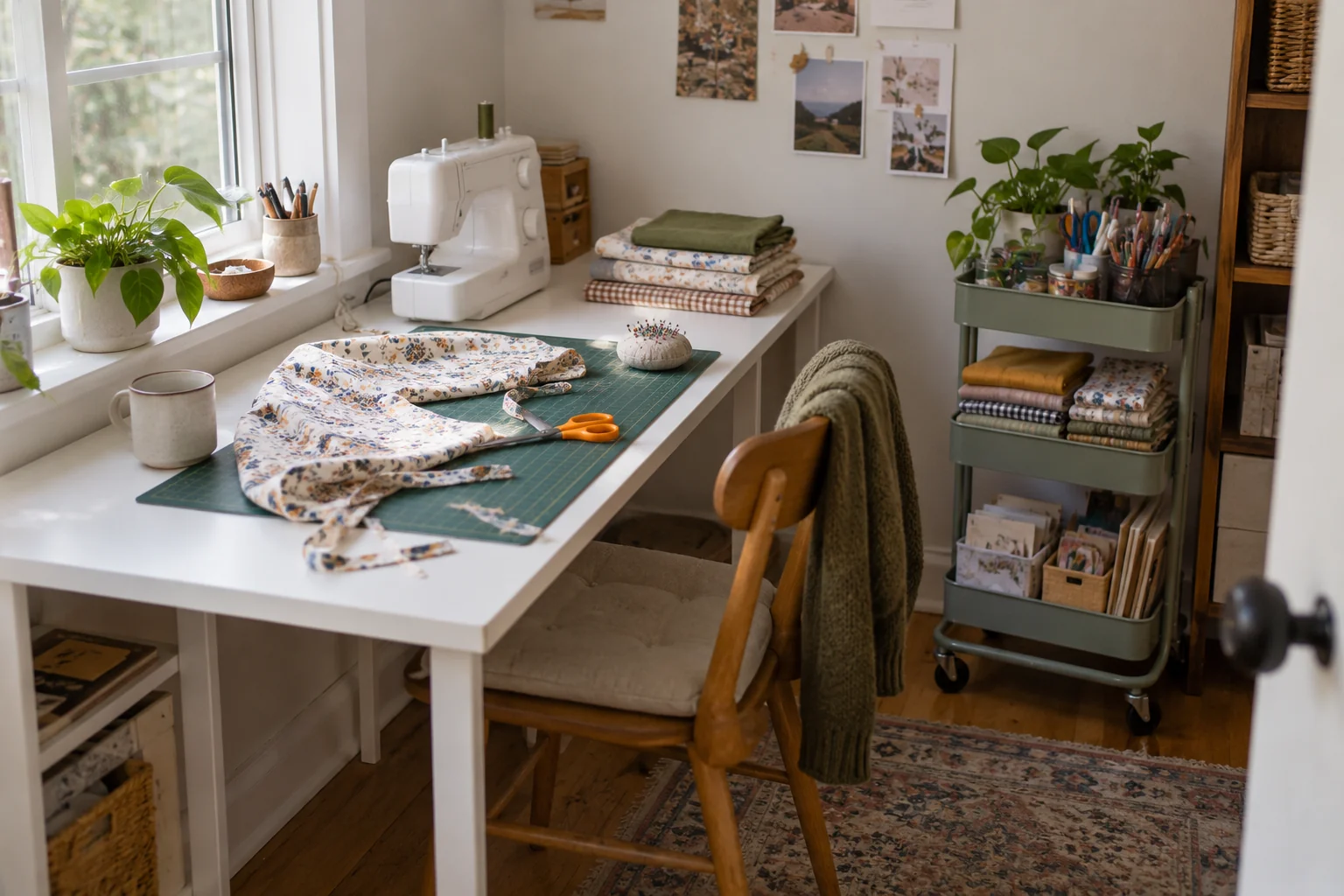
A useful craft station is not necessarily a permanent room. It can be a table, a compact cart, and a few well-chosen containers that let you start a project without searching for supplies. Design around one primary craft first, especially when the space is shared. The aim is to keep active materials accessible while protecting the rest of the household from loose tools, spills, and projects waiting to dry.
Separate active work from stored supplies
List what you need for a normal session and place only those items at the working surface. Keep reserve materials elsewhere so the desk does not become a miniature stockroom. Use a tray or shallow box for the current project, including its pattern, components, and notes. Test whether the tray can be moved without disturbing delicate work. Choose a surface covering appropriate to the materials you use and keep it separate from dining or other household activities. Leave room for your hands and elbows; every container placed on the desk reduces the space available for making.
Organize by the way you reach
Put frequently used, appropriate supplies in easy reach, with sharp tools stored securely when not in use. Group small parts in labeled containers that open without spilling neighboring contents. Keep original labels on adhesives, paints, and other chemical products, and follow their storage instructions. EPA guidance warns against putting hazardous products in food containers, even when that seems convenient. If children or pets share the room, choose storage that prevents their access to unsuitable materials. Try the arrangement during an actual session before buying a matching system of drawers and inserts.
Build a five-action closing routine
Decide how you will end each session: secure tools, close products, place unfinished work in its designated area, return reusable supplies, and clear the surface. Adapt those actions to your craft rather than using an arbitrary time target. Reserve a drying or curing location when the materials require one, following their directions and keeping it separate from household traffic. Leave a note describing the next step so returning to the project takes less effort. If cleanup repeatedly stalls, reduce the number of open projects or simplify the storage rather than adding more decorative organizers.
Before you begin
- Choose one primary craft.
- Keep a movable current-project tray.
- Store reserve supplies off the worktop.
- Retain original chemical labels.
- Write a short closing routine.
The station is working when you can begin a useful session and leave the room usable afterward. Prioritize a clear surface, safe storage, and a visible next step over a large display of every supply you own.
EPA: household hazardous waste
Plan your project with Remendia