How to set up a compact potting station
Keep the useful tools close and the mess contained.
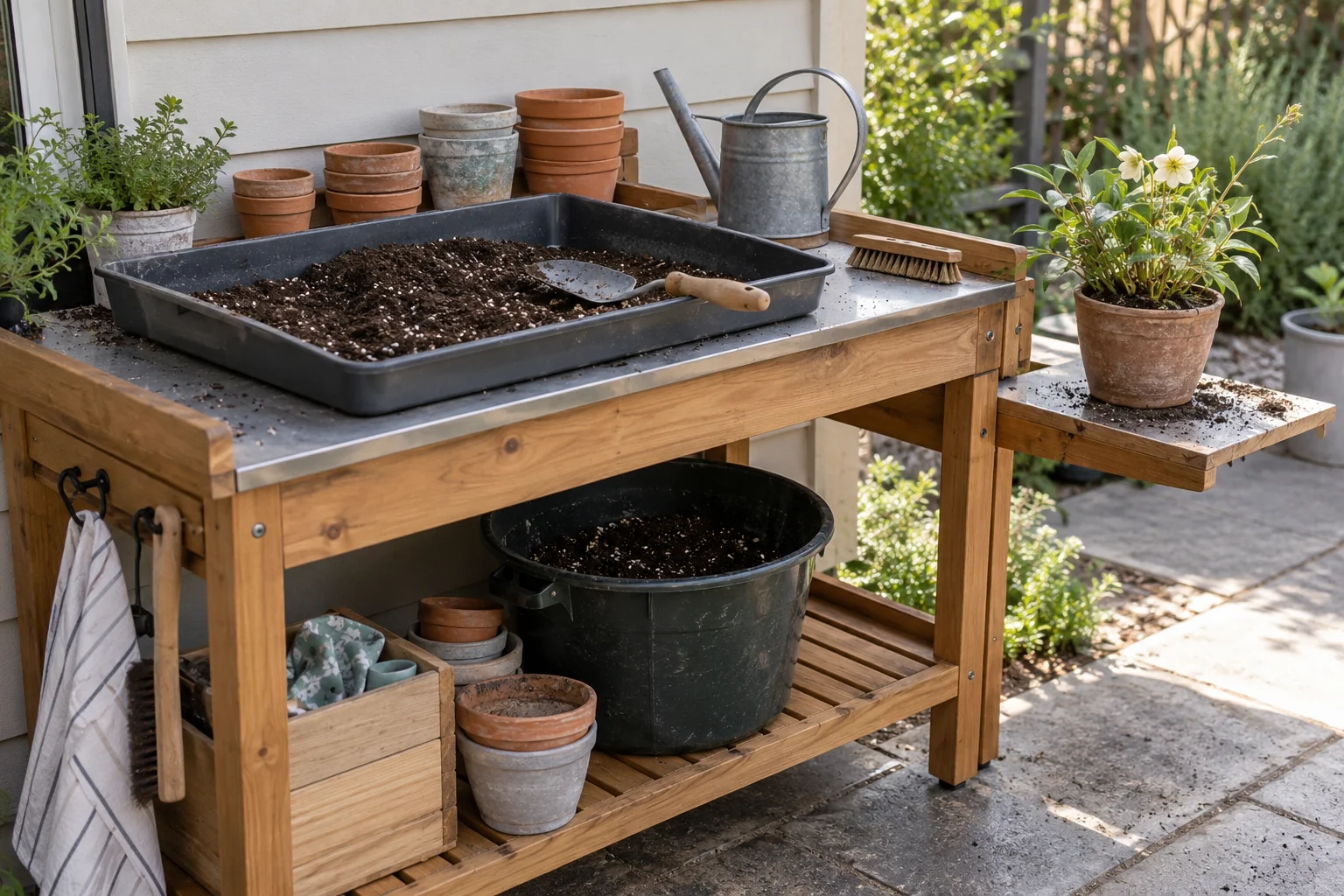
A potting station does not need to be a miniature garden shed. It needs a stable working surface, somewhere to contain loose material, and a few tools you can find without searching. In a small garden or patio, the best station may be temporary. Plan around the jobs you repeat, such as repotting herbs or sowing a few trays, and give the finished plants a separate place to go.
Rehearse one real potting job
Gather a pot, the appropriate growing medium, labels, a scoop, and the tools you actually use. Set them on an existing suitable outdoor table and perform a typical task with a tray beneath the work. Notice where your hands reach, where loose material falls, and where the finished pot waits. This rehearsal tells you whether you need a larger surface or simply a better sequence. Keep the incoming materials on one side and the finished work on the other. Do not buy a bench based only on its storage capacity if the working area is awkward for your usual tasks.
Store materials so they remain identifiable
Keep growing media in their original labelled packaging or preserve the full product information with any secondary container. Follow the handling and storage instructions on the bag. Separate plant-care products from everyday household items and keep them inaccessible to children or pets where required by the label. Store small tools dry and make their usual locations obvious. A modest box for labels, ties, and a pencil is often more useful than many tiny drawers. Leave space for a waste container so damaged labels and empty packets do not accumulate across the work surface.
Design the reset before adding shelves
Decide where excess material goes, how the surface will be cleaned, and where damp tools can dry before storage. If the station folds away, practise moving it and confirm that the packed version fits its home. Keep bulky spare pots only when you expect to use them, nesting compatible sizes where practical. Record the few missing items after several sessions. A permanent shelf is worthwhile when it solves a repeated access problem, not merely because the wall looks empty. The station is finished when you can start a job promptly and leave the area ready for another use afterward.
Before you begin
- Rehearse a typical job on an existing surface.
- Use a tray to contain loose material.
- Keep product labels and handling instructions.
- Provide a place for finished pots.
- Test the cleanup and storage routine.
Build the station around the sequence of work: materials in, potting, finished plants out, cleanup. Add storage only for items that earn their place through regular use, and keep the surface easy to restore.
Plan your project with Remendia